Thursday, September 28, 2006

Startling Discovery!


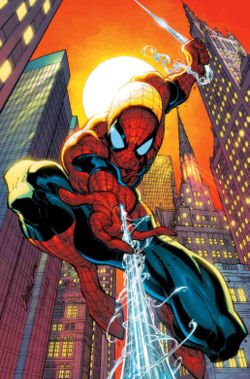
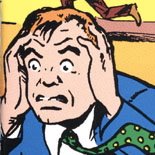
Spider-Man

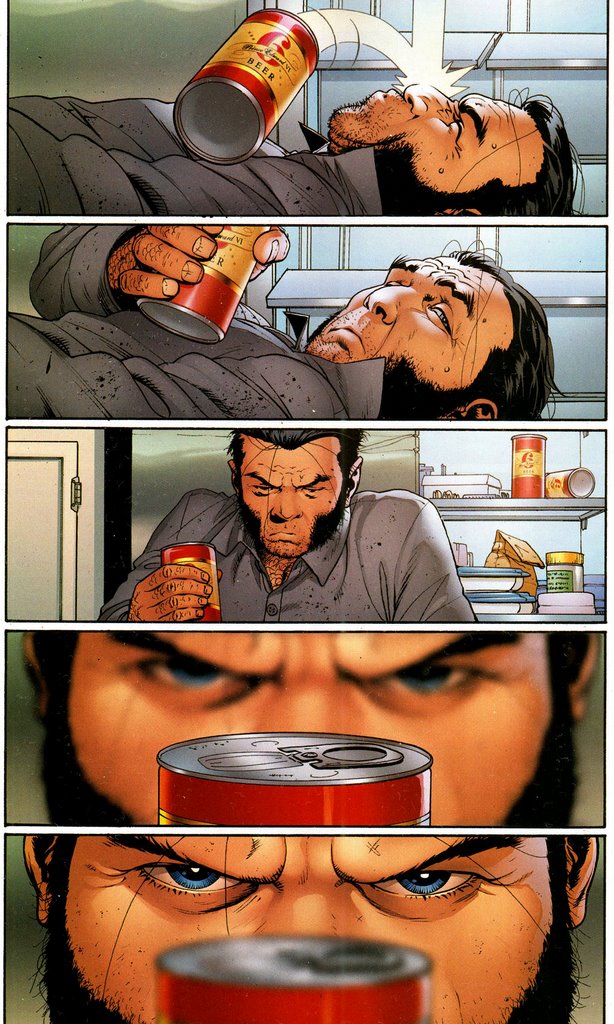
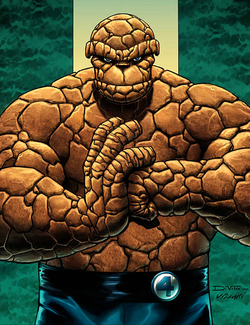
The Thing

Actually the same character!


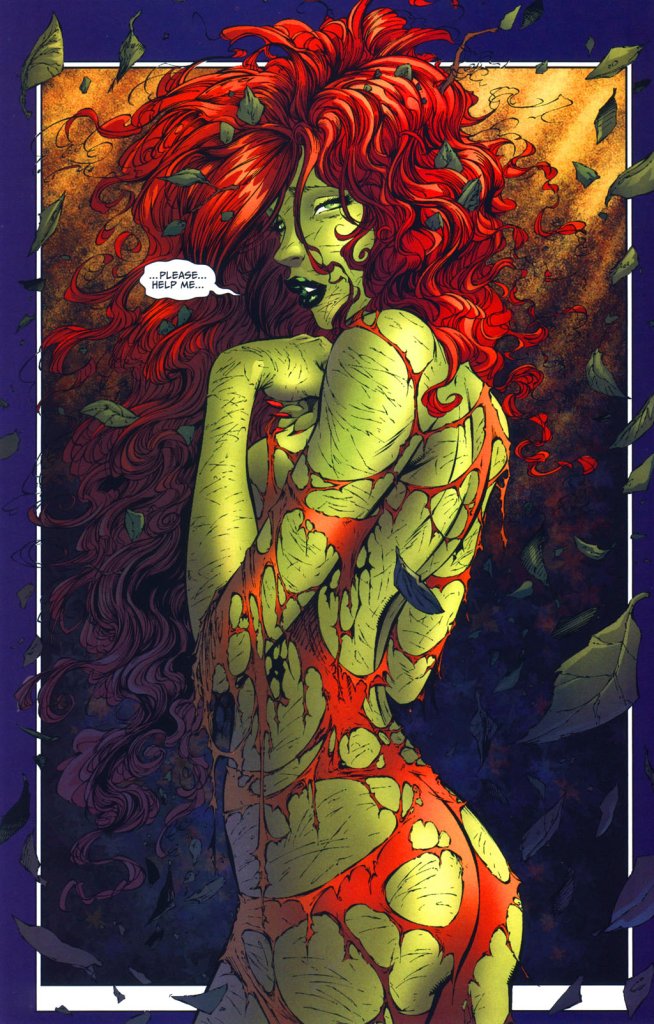
Hard luck hero whose sense of responsibility is far greater than even the great power he received in a radiation accident: an accident that on the one hand gave him the power to challenge gods and on the other turned him into a freak feared and shunned by the rest of society.

Orphaned as a child and raised in the outer boroughs of New York by his kind but poor Aunt and Uncle, he grew up to with surprisingly low self-esteem, given to DEEP self-pitying at the smallest set back, but hides his morose-ness behind a cavalier attitude towards the cosmic weirdness that surrounds him and witty banter with even his most deadly foes.

That pretty much sums up both characters there, doesn't it?

But they look different, you might say! Spider-Man is... and while the Thing is made of.... True! But the way they vary in design are precisely the ways they mirror the artists who designed them!

The Thing is stocky, strong, pugnacious and (originally) short... like Jack Kirby!


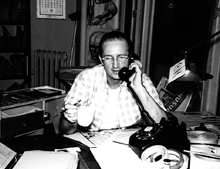
Spider-Man is lean, intellectual, and (originally) be-speckled... like Steve Ditko!


Which I guess just goes to show: writing yourself as the super-hero of your own story?

Not a new thing.

Wednesday, September 27, 2006

By the Stones of the Infinite

Occasionally when reading fantasy, an author creates an image, an idea of such cosmic horror that the mere contemplation of which could drive men mad.

Whether it is the gruesome Grand Guignol of a Stephen King novel, the more metaphysic disorientation of H. P. Lovecraft's non-Euclidian worlds, or the stark depths of human cruelty detailed by Edgar Allan Poe, you read things that make you question the sanity, the morality, the very humanity of the author.

I came across one of those ideas today. One of the writers of 52 not only conceived this mind-killing meme, but decided to write it down and share it with over 100,000 comic book readers. Who was it? I want to know who is responsible for making me consider Darkseid's testicles.

Let me repeat that.

DARKSEID'S


TESTICLES!


And I thought "Screech Sex Tape" was going to be the scariest idea I would confront today.

Tuesday, September 26, 2006

The Myth of "Who's Your Daddy?"

or, "Strange Women Lying in Ponds Distributing Swords is No Basis For a System of Government. "
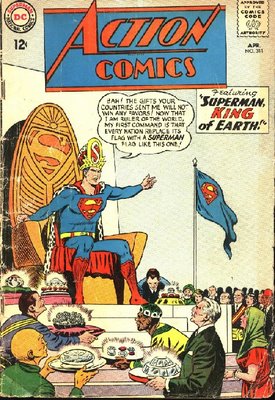
Once again, what started as a response to Matthew has grown into an entire blog post (including a little anti-Bush rhetoric and, to my surprise, praise for Infinite Crisis). In response to my last post that Superman was in fact a working class hero and his stories are anti-classist, he wrote

Everything you say about Superman is true. But you're talking about what Superman does, and what he thinks and believes and stuff. What I was talking about is who he technically is, and who he is is, basically, the Lost Prince of Krypton. He's like Carrot in the Discworld books.

This way, the Superman writers get to have it both ways. They can draw from the alien-aristocrat superhero archetype, but they don't have to make him act like it. (Contrast: Superman, and Dr. Tachyon from the
Wild Cards novels.) This may actually be one reason (out of all the many reasons) why Superman is such a great character.
I meant to respond right away, but I couldn't tell whether our disagreement over the class of Superman was a minor semantic disagreement over the definition of the word "is" (which would be too minor to even argue) or a major philosophical one over the meaning of social class and the nature of hereditary predestination. I'm going to assume it's the second, even though there is no way to do that justice in one post of my comics blog.

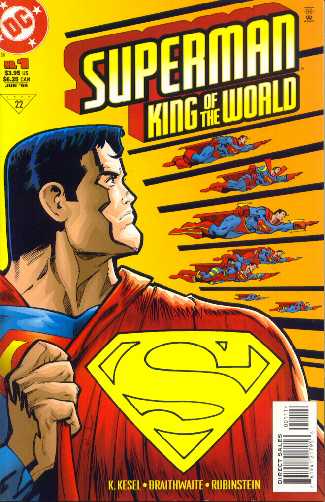
Matthew says that Superman, in the tradition of Oedipus, King Arthur, and Aquaman, may act as a peasant hero but he is in fact a king-in-disguise, that it is his Kryptonian genetic destiny shining through that makes him Superman. That he's a hero because of his elite genetics, no matter how much he pretends he is a commoner.
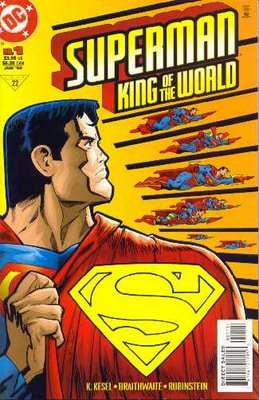
My problem with basing Superman's class on his genetics over his actions is that class is a social construct. It is only through what he and others consider him to be that we know what class he belongs to. And Superman chooses NOT to be a king (stories where Superman chooses to become a king will be ignored because they are terrible) The myth of aristocracy is that class is genetic, that some people are just born good enough to rule, and that this inherent goodness can be passed down from generation to generation (like the X-Gene!)

And Superman's own story proves the myth false. Yes, Clark's blood obviously gives him "powers and abilities far beyond those of mortal men." However, what makes him a good guy can't be his blood, because Kryptonians are the assholes of SPAAAACE (below the comic).

Zod, Preus, the Eradicator, the new Kara Zor-El (possibly)... Those that come to Earth preaching the superiority of Krypton are by and large really, really bad guys. And even under the best of circumstances, Kryptonian society was ruled by arrogant morons who couldn't see their planet was falling apart despite the evidence of the best scientists of the time (cue Global Warming joke). So clearly, just being vulnerable to kryptonite isn't enough to make you better than the masses.

No, what makes Superman a hero is the choices he makes. And whenever Superman is forced to choose between the Kryptonian way and the Earth way, he chooses Earth, every time, and embraces his life as Clark Kent (the end of Kingdom Come, for example). And as long as Superman chooses to live as a middle-class employee, THAT is who he is. Jor-El and Lara may have given him powers, but it's Jonathan and Martha, his "humble" lower class parents, who made him a hero.
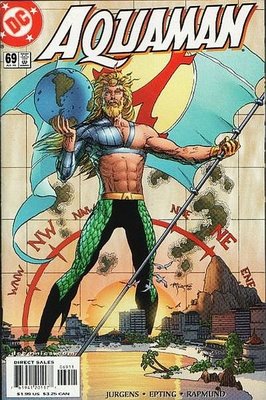
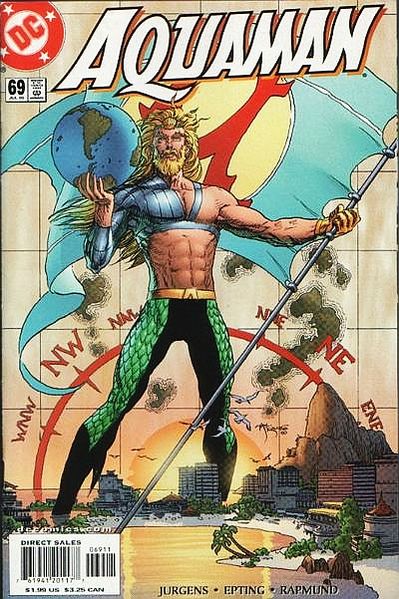
This is unlike almost every other superhero, by the way. Contrast Superman with Aquaman, for example. Like Superman, he was orphaned as a baby, raised in an alien world, and grew up as a human for at least part of his life (where he learned English and was christened Arthur Curry). But when Aquaman learned where he was really from, he rejected the surface world and threw in his loyalties to Atlantis whole-heartedly, in the more traditional Arthurian arch-type. (Ironically, to become King Arthur, he had to reject the name "Arthur.") Even given the chance, Superman would NEVER give up Earth to return to Krypton.
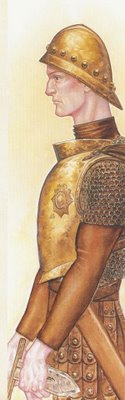
Matthew brings up Carrot Ironfoundersson of the Discworld novels, another heroic king-in-disguise who refuses to take the throne. But that, I think, argues for MY point. Discworld, after all, is a satire of the myth of aristocracy (among many other things). Most of the other characters think Carrot should rule because of his unacknowledged heritage, but those that think that way are idiots and bad guys.

The smarter characters, including Carrot himself, know he's not smart enough to run the city, nor ruthless enough to do half the horrible things he'd need to as King (or Patrician, as the position is called). That having the right name and the right daddy isn't enough, that "the right blood" is in fact close to meaningless (I'd make another joke here...). Carrot may be related to a king, but day to day it's much more important that he learned how to be good man (or dwarf, it's complicated) and can throw a strong right hook.

Carrot, of course, is a deliberate satire, and I doubt Siegel and Shuster were thinking too deeply about Jungian arch-types and Marxist rhetoric when they created their science fiction strong man, but I think Superman is a stronger character because of it. Carrot can really only be that satire: "King Arthur, but not," stuck in an old debate over the divine right of kings and dictators. Superman can be that satire and more, moving beyond that class discussion to a classless society where a man is judged only by his actions.

Which leads me to my defense of Infinite Crisis. I dropped Civil War when I realized it wasn't about anything. And while Infinite Crisis was flawed, I can tell you what it was about: the myth of heroic destiny. Superboy-Prime (and to some extent Alexander Luthor) believed he had the right, the duty, to destroy the universe and remake it in his image because of who his Kryptonian parents were, and that he would ALWAYS be in the right, always be the hero because his name was Kal-El, he was from Krypton, and he had great power. He was wrong. In the end it came down to Superman, our Superman, laying it out for him:
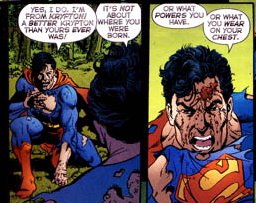

And, after laying Prime out, Clark lets him know what it's all about:
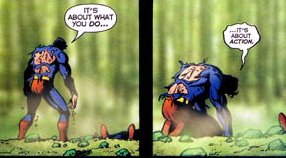

It's about action.


What makes Clark Kent "Superman," and not just another asshole Kryptonian, is his actions. So when judging what class Superman belongs to, whether he's an elite looking down on the masses or one of us, we can only judge him based on "what Superman does, and what he thinks and believes and stuff." Because what else is Superman, in the end, other than those things?

Sunday, September 24, 2006

The People's Superman

Matthew at the Legion Abstract has a great post about class and superheroes that you need to read right now and then come back here. This started as a response but it became very long and I remembered I have my OWN blog. (post on Detective 823 continues to be delayed).

His claim, and it's one I generally agree with, is that superheroes as a genre tends to be "classist." Heroes tend to be either actual nobility, such as Wonder Woman or Aquaman, or very rich, like Batman and Green Arrow, and they fight to save the masses from themselves rather than fighting to change the social structure that keeps the poor in poverty. There are obvious exceptions, but that seems to be true, going back to the proto-typical stages of Zorro and the Scarlet Pimpernel.

My one disagreement with Matthew is that he classifies Superman as an "aristocratic" hero, and quite frankly I feel the opposite is true. Superman did and does fight for social change. In the Superman Archive, he clearly starts out as a populist hero, a champion of the working class, taking on war profiteers, state-run orphanages, crooked boxing promoters and poor mining conditions. Watch Superman lead a party of upper class twits into a mine and then bury them alive to teach them a lesson and tell me that's not a guy who fights the power.

And today he fights against class elitists like CEO (and ex-PRESIDENT) Lex Luthor and monarchic dictators like Darkseid. Compare that to Batman's typically lower class, obviously criminal, more anarchic villains. Superman fights against those who would impose their own version of order on the world, while Batman fights those who would destroy the order HE imposes on Gotham.

And while Matthew's right, it would be morally repugnant for Superman to enforce social change, Clark Kent can and does champion those changes from his job as a reporter for the Daily Planet.

Clark, after all, had a lower middle class rural upbringing and a strictly middle class life style once he became a reporter. Sure, it's a "glamor" career that makes him somewhat famous, I'm guessing he doesn't actually make that much money (Lois might). He might not have Peter Parker's money problems, but Clark almost certainly knows what it's like to worry about the bills.

But Superman is the exception here, not the rule. By nature, a superhero is someone whose unique abilities place them apart and above, sometimes literally above, most of society. That these unique beings then go on to be vigilantes, placing their own personal definition of justice above that of the police and democratically elected government, is elitist, aristocratic, and borderline fascist (I'm looking at you, Batman).

It's something that the best superhero stories tend to examine, from Watchmen and The Dark Knight Returns to Kingdom Come and The Authority (and which Civil War could have explored, but disappointingly cast aside in favor of shocking last pages and easily identified bad guys.)

And it's something the blogosphere should start discussing louder. So let's begin!

Saturday, September 23, 2006

Why I'm Dropping Civil War

Before this starts, I just want to point out that I was really enjoying Civil War.

Until last Wednesday.

Putting aside all the fanboy complaints of lateness and "character assassination," Civil War #4 made the series objectively bad. In a, "I have lost all interest, why should I continue to read it?" manner.

If you read my review, you can see that my complaint before was that it seemed like the deck was stacked against the pro-registration side, and that a more even handed approach would better serve the theme of how an ideological argument between two honorable men can lead to war.

Well, with issue four, "stacked against" became "marked cards." Instead of just acting like jerks, the pro-registration side has moved on to morally abhorrent behavior, recklessly creating an abomination of both science and religion and hiring psychotic murderers to do their bidding. Worse, there is no good reason given for why Reed Richards and Tony Stark feel they have to take such extreme and obviously stupid actions, they just go ahead and take them.

And it's that last page reveal, that Iron Man has turned to Bullseye, who once killed a church full of nuns, that revealed to me how hollow Civil War is. Because at that point Tony went from very probably the bad guy to absolutely the bad guy, but why he's the bad guy has NOTHING to do with the registration act they're supposedly fighting over.

Mark Millar still hasn't told us why the registration act itself is bad, just why the people defending it are, and the longer the story goes on without a cohesive argument against or even for the act, the more obvious it becomes Millar doesn't care what they're fighting about, just as long as there's a law that some heroes end up on one side of and some heroes end up on the other. They might as well be arguing "Great Taste" over "Less Filling", the Great Butter Battle, or, god help me, the color red vs. the color blue. Tony would still be wrong.

And if Mark Millar doesn't care why they're fighting, then I don't care that they're fighting. The whole thing becomes just superheroes punching and killing each other because Millar wants to see who'd win, a tale full of sound and fury, signifying nothing.

So I'm done. Now that I know there's no "there" there, I know I will get no more enjoyment out Civil War (unless Jake performs another hilarious evisceration of the next three issues). Instead, I will use my four bucks to buy Casanova and Fell, where I know the writer at least is, y'know, thinking.

Friday, September 22, 2006

A Dichotomy

If past sales are any indication, Marvel Comics best selling book of the month and its worst selling book of the month both came out last Wednesday. One of them features Captain America acting like a total asshole. The other features a total asshole trying his damndest to act like Captain America.

Guess which one I actually enjoyed reading.


(To be fair, neither comic featured the page of the week, which sits at the unlikely crossroads of Popeye, Little Nemo, Futurama, and Badass Week.)

Thursday, September 21, 2006

One, Two Punch

Y'know how I said I was working on a post about Detective 823 that I had to be careful writing? This isn't it.

It is about Detective 823, though. (Can you tell I'm procrastinating on the big post?)

So, my major complaint about the issue was the abbreviated ending. The plot's going along fine up till page 20 or so: just as Batman and Robin discover that the plant monster attacking Poison Ivy is made up of the resurrected bodies of her victims (basically putting her on the wrong side of the Swamp Thing origin story), the creature attacks, in the heart of the Batcave, and promises to kill her and anyone who gets in its way. That's a pretty good set-up.

It's a shame that Dini only has two pages left, because the entire resolution is Batman immediately releases some Bat Plant-Repellent and the creature runs away. The end.

The problem, I think, is that Dini decided to lock himself into a single issue format for his run on Detective, where each issue's main plot was wrapped up in that issue. Now, I like a good done-in-one story, but in this case I think the story would have been much better served as a two parter.

Issue one would be basically the same issue, but ending where the creature screams out its name (possibly in logo font)! Issue two would be Batman and Robin, having been put in the uncomfortable position of saving a murderer from the bloody vengeance of her own victims, teaming up with the almost assuredly treacherous but admittedly brilliant Ivy to figure out a way to stop the monster without killing it.

But then I tend to think that two-parters have the perfect pace for modern comics. One issue to explain the plot and get everyone into their positions, ending in a great cliffhanger with a one month intermission for the readers to figure out how our heroes are ever going to get out of this one, and then the second issue to provide the surprising yet ultimately obvious solution, that hopefully involves a lot of kicks to the head. One issue to set 'em up, one issue to knock 'em down.

I do know that some of my favorite stories are the two-parters. The first Zauriel story, for example, does a nice job in the first issue of explaining the four or five problems the JLA faces, including a falling Moon and Rogue Angel General on a tear in San Francisco, and the second issue resolves each conflict, one by one, until peace is restored.

Geoff Johns had a great run on JSA where every other issue ended with certain death ("Oh no, Hawkman and Sand have been poisoned and there's only enough antidote for one!") only to be followed by an issue where the team overcomes the impossible odds in some clever fashion ("Oh, Sand has turned to sand and is thus temporarily immune from poison.")

But mostly, I think the two parter takes better advantage of the serial nature of comics than the done-in-one does, without stretching out a story too much the way a five or six part arc can. The story moves, but it also has the space to get somewhere.

I think.

Wednesday, September 20, 2006

Is Green Skin Some Kind of Turn On?

I have a longer post on Detective Comics #823 that I want to be very careful writing before posting, so in the meantime a thought I had while composing:

The plot depends upon Pamela Isley's ability to walk into a bar and pick up strangers. To which I have to ask, "don't they notice that she's, y'know, green?" Isn't that kind of a hint that she's POISON FRICKEN IVY, known killer and walking bio-hazard? That MAYBE it's not a good idea to go home with her?

Or are there a lot of green women running around the meet-markets of Gotham? Are there enough aliens, Atlantians, mutants, robots, and anthropomorphic animals running around the DCU that green skin just isn't that big a deal any more? Not just green, of course. Starfire's orange, Bulletteer's silver, Blue Devil's, well... and they seem to be able to have normal lives, outside of superheroing. I mean, Detective Chimp may get funny looks when he orders his soda in a French cafe, but they still serve him (and EVERYBODY gets funny looks in a French cafe).

So maybe the citizens of Gotham have just gotten used to the fantastic, and don't give the green skin a second glance. What's one more plant person, more or less?

Still, if she's walking around in her usual garb of strategically placed foliage, and looks like POISON IVY, then I just MIGHT consider hitting on the brunette in the corner instead.

Tuesday, September 19, 2006

Tuesday Night Re-Recommendation #9

It has come to my attention that NextWave is one of Marvel's worst selling titles.

Which means not enough of you are listening to me. I mean, the book has humor, explosions, great dialogue, kicks to the face, Elsa Bloodstone, Fin Fang Foom, explosions, and Captain ****, whose name is so filthy Captain American beat the crap out of him just for mentioning it.

What more do you people want? How about dancing Mindless Ones?


Yes, we are one step closer to my dream of a superhero musical. And NextWave already has its own theme song!

Anyway, NextWave is a very FUN book. Possibly the most FUN book on the shelves. So, if you're looking to be entertained, you really need to buy NextWave tomorrow.

Because if you don't, Marvel is going to cancel the book. And if THAT happens...

THEN I CAN'T READ NEXTWAVE!

And that would be bad.


p.s. I has also come to my attention that Gail Simone thinks asking "Why aren't you reading this book?" is smug. To which I have to say, "Yeah, well, you... you're a great writer!"

That'll show her.

Monday, September 18, 2006

Is Twelve Issues a Year Too Much to Ask?

That probably reads more sarcastic than I intend. It should be read "Is twelve issues a year too much to ask?"

Should we expect the average professional penciler to be able to produce (12 x 22) 264 finished pages every year? Which is roughly a page every work day, with weekends and holidays factored in.

I know some guys can do it, like Scott McDaniel, Phil Hester, and Jim "The Talent" Balent, who, say what you will about what he chose to draw, managed to draw 79 straight issues of Catwoman without a fill in artist, and that's a pretty impressive run. (why yes, I do own all 79 issues. Why do you ask?)

And I know you're going to say Jack Kirby did that on 5 titles on a time, but c'mon, he's Jack Fucking Kirby. Larry Bird could sink a three-pointer from half court, but that doesn't mean the Celtics expect any of their current players to be able to do that.

Most artists today, I think, just cannot do that. And frankly, I don't think we should even expect it.

I mean, it's easy for us on the clattering keyboard side to say, "yes, that's what they're paid for," but I know from (vicarious) experience that pencilling is hard-ass work. On top of the creative time spent with the blank page, figuring out panel lay-out and blocking each scene, making sure the flow is right and the narrative clear, there's the actual craft of drawing, filling in each line and curve, rendering each face to be distinct, making the background feel both real and at the same time out of focus. And the more detailed, the harder it is to make and the longer it takes to produce.

And while a mini-series can be given the lead time needed to account for an artist's speed, ANY head start will eventually catch up to a penciller on an open ended book. So we have three options for an on-going book (if you can think of any others options, please let me know). You can stick to the 12 months, rain or shine, schedule, and just be prepared to drop a fill-in issue or two in, either stand alone or not, or you can work the schedule around the artist, or you only hire artists who value the deadline over the art.

And I don't know what's the right thing to do. Do you?