Showing posts with label Spider-Man. Show all posts

Monday, April 16, 2007

Oh you've GOT to be kidding me

SPIDER-MAN
Theatre
MUSICAL

AEA 29-HOUR REHEARSED READING
Director: Julie Taymor
Music and Lyrics: Bono and The Edge of U2
Musical Supervisor: Teese Gohl
Book: Julie Taymor and Glen Berger
Producer: Hello Entertainment/David Garfinkle, Martin McCallum, Marvel Entertainment
Casting Director: Telsey + Company
Rehearsals: Begin 7/2/07 in NYC
Reading: 7/12/07 and 7/13/07

Oh my God, they're ACTUALLY doing Kiss of the Spider-Man!

Wednesday, February 28, 2007

I Aten't Dead

Just resting. Big changes at Casa del Padnick (looking for a new job in publishing) and a HECK of a lot of travel took the blogging bug out of me for awhile, but I'll be back. Just you wait.

In the meantime, amuse yourself with some of my Marvel musings:

Has Fin Fang Foom ever fought Galactus? If not, why not?

When I started reading Civil War, I kind of wanted Millar to surprise me and show me that Captain America was in the wrong. But to quote a great man, "Not Like This! Like This!"

Aunt May's dead. Again. Was that really the best way to go with the whole unmasking storyline? Couldn't they have taken this opportunity to take Spider-Man somewhere actually new?

In honor of the second greatest cover of 2007, I'm trying to a write a song. So far I've got:

"His name was Ego:
He was a planet
With heart-shaped craters on his head
and a beard all filled with dread"

I'm trying to figure out why Spider-Man killing Mary-Jane with his "love" in Reign icks me out but a similar development near the end of Peter David's run on The Incredible Hulk I was fine with. Is it the fact that Kaare Andrews specifically locates the radiation to Peter Parker's erm, "fluids"?

Yeah, yeah it is.

NEXTWAVE: Agents of Atlas. Am I right, or am I right?

Wednesday, October 18, 2006

Thursday, September 28, 2006

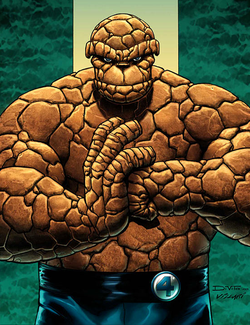
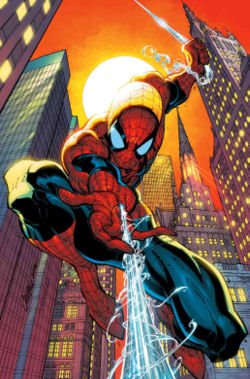
Startling Discovery!


Spider-Man

The Thing

Actually the same character!


Hard luck hero whose sense of responsibility is far greater than even the great power he received in a radiation accident: an accident that on the one hand gave him the power to challenge gods and on the other turned him into a freak feared and shunned by the rest of society.

Orphaned as a child and raised in the outer boroughs of New York by his kind but poor Aunt and Uncle, he grew up to with surprisingly low self-esteem, given to DEEP self-pitying at the smallest set back, but hides his morose-ness behind a cavalier attitude towards the cosmic weirdness that surrounds him and witty banter with even his most deadly foes.

That pretty much sums up both characters there, doesn't it?

But they look different, you might say! Spider-Man is... and while the Thing is made of.... True! But the way they vary in design are precisely the ways they mirror the artists who designed them!

The Thing is stocky, strong, pugnacious and (originally) short... like Jack Kirby!


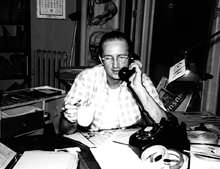
Spider-Man is lean, intellectual, and (originally) be-speckled... like Steve Ditko!


Which I guess just goes to show: writing yourself as the super-hero of your own story?

Not a new thing.

Sunday, September 24, 2006

The People's Superman

Matthew at the Legion Abstract has a great post about class and superheroes that you need to read right now and then come back here. This started as a response but it became very long and I remembered I have my OWN blog. (post on Detective 823 continues to be delayed).

His claim, and it's one I generally agree with, is that superheroes as a genre tends to be "classist." Heroes tend to be either actual nobility, such as Wonder Woman or Aquaman, or very rich, like Batman and Green Arrow, and they fight to save the masses from themselves rather than fighting to change the social structure that keeps the poor in poverty. There are obvious exceptions, but that seems to be true, going back to the proto-typical stages of Zorro and the Scarlet Pimpernel.

My one disagreement with Matthew is that he classifies Superman as an "aristocratic" hero, and quite frankly I feel the opposite is true. Superman did and does fight for social change. In the Superman Archive, he clearly starts out as a populist hero, a champion of the working class, taking on war profiteers, state-run orphanages, crooked boxing promoters and poor mining conditions. Watch Superman lead a party of upper class twits into a mine and then bury them alive to teach them a lesson and tell me that's not a guy who fights the power.

And today he fights against class elitists like CEO (and ex-PRESIDENT) Lex Luthor and monarchic dictators like Darkseid. Compare that to Batman's typically lower class, obviously criminal, more anarchic villains. Superman fights against those who would impose their own version of order on the world, while Batman fights those who would destroy the order HE imposes on Gotham.

And while Matthew's right, it would be morally repugnant for Superman to enforce social change, Clark Kent can and does champion those changes from his job as a reporter for the Daily Planet.

Clark, after all, had a lower middle class rural upbringing and a strictly middle class life style once he became a reporter. Sure, it's a "glamor" career that makes him somewhat famous, I'm guessing he doesn't actually make that much money (Lois might). He might not have Peter Parker's money problems, but Clark almost certainly knows what it's like to worry about the bills.

But Superman is the exception here, not the rule. By nature, a superhero is someone whose unique abilities place them apart and above, sometimes literally above, most of society. That these unique beings then go on to be vigilantes, placing their own personal definition of justice above that of the police and democratically elected government, is elitist, aristocratic, and borderline fascist (I'm looking at you, Batman).

It's something that the best superhero stories tend to examine, from Watchmen and The Dark Knight Returns to Kingdom Come and The Authority (and which Civil War could have explored, but disappointingly cast aside in favor of shocking last pages and easily identified bad guys.)

And it's something the blogosphere should start discussing louder. So let's begin!

Tuesday, September 12, 2006

I Think More Superheroes Should Die

(huh, I can already hear Dr. Polaris agreeing. Anyway...)


Superheroing is an inherently dangerous activity. Let's face it, the guys in the capes aren't just the police. A superhero is cop, fire fighter, and soldier in one, and what these professions have in common is that each is a person who saves lives by risking and sometimes losing his own. Add to that mortal enemies with world shaking power, and you're looking at people whose day to day living is very precarious.

But if you want me to believe that, at any moment, a superhero could die, then every now and then, one of them has to actually die. The stronger possibility of an unhappy ending is one of the major advantages of on-going, episodic fiction that comics should exploit better. Because when the bad guy puts the hero in his unescapable death trap and looks like he's going to get away, there's a chance he really IS going to get away, if only for someone else to capture him three or four issues later. That's the way to ramp up the DRAMA.*

Now, I don't mean to be morbid about it. I'm not in the "kill 'em, kill 'em all" camp. The deaths should be rare, if only so superheroes don't look like complete incompetants. And while they don't all need to be heroic sacrifices, like Barry Allen--they could be fatal mistakes, like Booster's recent demise, or victims of effective villains, like Vibe's or Blue Beetle's, or even the truly tragic cannon fodder, like Pantha--the deaths need to have an impact, on the plot and on the surviving characters. And because I like deaths to have impact, I'd prefer the dead remain dead, but I understand that any fantasy genre in which The Spectre is one of the oldest characters will have a looser definition of what death means.

And the deaths certainly shouldn't be advertised in advance. One, it's kind of creepy. Two, it robs tension from issues in which a death isn't advertised. I know everyone is going to make it out of an issue if it's not solicited "Someone makes the ultimate sacrifice." Three, it robs tension from issues in which a death IS advertised. Even if it's obvious Captain Lamb is going down with the ship, the death has a lot more impact if you thought there was a chance he could have made it.

And some characters, of course, can't be killed. The editorially protected icons, of course, are practically immortal. No reader would really want Batman (or even the Joker) dead, and more importantly, no one would ever believe he was really dead anyway, no matter how graphic the death. I would have said protagonists of on-going books were safe as well, but blowing up Oliver Queen to make way for Conner Hawke was one of the best moves Chuck Dixon made on his run of Green Arrow.

I though Peter Milligan and Mike Allred's X-Statics nee X-Force handled death brilliantly. Killing off 90% of the team (including the narrator) in the first issue served notice that neither the characters nor the readers could take the success of any mission for granted, and then played out the emotional effect of such a highly dangerous life would have, and then what the effect would be if some people, but only certain people, came back.

Now, I can already hear some objections, notably "comics are supposed to be escapist fantasy and I don't want to be reminded about things I find upsetting, like death." To which I say, "Stop reading superhero comics."

Seriously.

Batman watched a mugger shoot his parents. That's the basics. If you want to remove violent death from superheroes, you have to give up Batman. And Spider-Man. And Superman. And Captain America. Heck, get rid of World War II and all those nasty Nazis.

Superheroes is NOT an escapist genre, not if by "escapist" you mean "a genre in which you don't have to deal with anything in the real world you don't like." Superheroes is kind of the opposite of that, a genre in which VERY REAL PROBLEMS are exaggerated and distorted to be scarier, which somehow allows the reader to deal with these problems through metaphor and analogy. A superhero universe is a worse place to live, where everything we have to deal with exists, but with superpowers. (Cue President Lex joke)

The danger, the very real danger to their lives, the fact that just by signing up for the Justice League a hero puts a target on his back, the fact that they might die alone, or suddenly, and possibly in a painful, undignified way, and they DO IT ANYWAY...

well, to me, that's what makes them a hero.


*One of the reasons I didn't like Grant Morrison and Frank Quitely's Earth 2 was the idea that on "our" Earth, good can't lose. Well, that sucks all the tension out of the story.

Tuesday, August 22, 2006

The Choreography Would Be Amazing...

Is a superhero musical a bad idea?


I can only think of one, and from what I've heard it's not very good.

But was that a matter of execution, or is there something inherently antithetical about the genre of superheroes and the medium of musicals?

My gut says yes, but trying to back it up with actual reasons is more difficult. After all, superheroes have succeeded in every other medium I can think of, so why not?

There's the technical questions, of course. Superheroes tend to play on big fields that would seem difficult to capture on a single stage, but Wicked is currently a hit, and that has flying monkeys, on-stage transformations and falling houses. And people have been performing Wagner operas for over a hundred years now.

There's the campiness of musicals, but come on. The nineties were six years ago, man. We embrace our campiness now. We adore our Superman Family collection. We LOVE the Adam West Batman! Some days you just can't get rid of a bomb!


There's the music bit, but music's been a part of superheroes from their first adventures off the page. How many of you don't hear John Williams's score when see Superman swoop in? How many of you couldn't break into the Spider-Man theme on a moment's notice?

Besides, doesn't it seem like a genre where beautiful young men and women in bright, form fitting costumes get into athletic confrontations with each other when not engaging in melodramatic internal monologue or hyper-dramatic declarations of evil intent seem MADE for the Broadway stage?

But before you say anything, I leave you with five words:

Kiss of the Spider-Man.

Sunday, July 23, 2006

Civil War #3

Now that I have my comments working (that sound you hear is me, repeatedly slapping myself in the forehead), I can see that Jenn of Reappropriate asked for my further thoughts on Civil War.

And the review remains pretty much the same. The art and plot are still fantastic. The photo-referenced pencils and inks give a realistic, weighty feel to the action. Just look at the panel of Iron Man punching Captain America in the face (no scanner, can someone help a brother out?). [Thank you, Lady That's My Skull.]


I've seen more violent, gory punches before, in the Authority or Ultimates, and I just assume that the Hulk has hit Cap in the face harder, but that certainly seems like the most brutal punch I've ever seen. Maybe it's the way Cap's mask is tearing off, or the slanted bloodstains across Iron Man's yellow happy face mask (no, I don't think it's just a coincidence), but the shear amount of detail and "realism" in the image make the whole panel more beautiful and the whole action more ugly.

And again, plotwise, it's really strong. Once the characters have taken their places (and I'll get to characters in a second), the scenes flow into each other with a nice sense of inevitability. You never get a scene which makes you think, "am I reading the same book?" which plagues most massive crossover events. And the question "who shot first" is going to plague Marvel for years (that's a good thing). Was it Iron Man, for setting up a trap in the first place? Or Captain America, who, under the guise of compromise rejected out of hand Iron Man's attempt at negotiation and reconciliation? And then there's that gorgeous last page, implying that the shit REALLY about to hit the fan, which will only be topped when a certain Green Goliath is done playing Spartacus.

But then there's the characterization and dialogue. On the anti-registration side, there is still ZERO doubt that they are in the right, despite the fact that there are STRONG arguments to be made against just letting Hercules beat the crap out of everybody he thinks is a bad guy! But the pro-registration side is worse. Tony I've written off as an asshole, and could deal with that (amazing how much that one moment of self doubt in issue two did for me). And Reed Richards has issues, but he's never been this cold to his wife and brother-in-law before. But the real problem is Spider-Man. Spider-Man is supposed to be the anti-asshole, bantering with his enemies even as he lays the smackdown on them. But here he's calling Daredevil and the Vision "schmucks," being patronizing to the Young Avengers (who are, what, 6, 7 years younger than him at most?). Even if it wasn't "out-of-character," it's still tipping your hand to put all the assholes on one side, and all the guys who just want to help people and play basketball with kids with cancer on the other.

So pretty much same as before. I'll enjoy reading the series through, and since I'm NOT a regular Marvel reader, I don't have to worry about "the long term" effects and just enjoy the story as is. But so far it's just good, and all it would take for it to be great is if the characters and dialogue were as nuanced, detailed, and real as the art.

Thursday, June 29, 2006

Thursday Thoughts #1

First off, a big shout out to When Fangirls Attack! for the link love. Not only was the link accompanied by a strong recommendation to read (aww, thanks guys!), it also boosted my visitor count.

Seriously considering turning this into a feminist comics blog, just to keep up the stream of readers.

But no comments yet. Not even from James Meeley. James, if it helps, I really did enjoy your wife's list of good or bad superheroes to date. That was some funny stuff right there. Not sure how it fits into your belief that "a super hero comic is not the platform for 'exploring sexual identities'", particularly the bit where she suggests Namor would be bad in the sack or that Ralph Dibny could inflate his body parts "the right way," but whatever. I guess as long as it's not two dude holding hands.

On another note, did you know I bought comics today? A crapload of them. Too many to review tonight, but I did break down and buy Civil War, which I had only been skimming in my local comic book shop.

You know what? It's really good. The art is amazing. The shot of the Patriot leaping through the air, just a quiet little WOW moment in the midst of a lot of talking heads. Fantastic. And the writings been good too. Not as strong in the dialogue or characterization (besides Tony, no one seems to have second thoughts about the side they've chosen.) But Spider-Man unmasking on national television? J. Jonah Jameson fainting? Yeah, right here and now I'm willing to say that's better than anything that happened in Infinite Crisis, and coming from DC fanboy like me, that's saying something.

My only major complaint is that they stacked the deck to one side. I mean, I understand Iron Man's position, in the abstract I already agree with it. And if it was Iron Man, military industrialist and former secretary of defense, vs. Daredevil, defense attorney and vigilante, you would have a classic debate between the government's need to protect its citizens vs. the individual's right to privacy and autonomy, balanced by two characters of roughly the same popularity. And if Iron Man had Spider-Man as a proxy, Daredevil could have used Wolverine.

But once Captain America took a side, the moral debate was over. (I don't remember where I first read that. If you remember, or you wrote it, could you tell me in the comments section?) Cap's right. He's always right. He's Marvel's equivalent of Uncle Sam. Heck, he IS Captain America. So once he chose the anti-registration side, the debate was over. At that point, it becomes clear that there is more going on here than good people violently disagreeing over the best solution to a difficult, complex problem. Once Cap picks a side, it means there is something else, something ANTI-AMERICAN about the other side, something driving the heroes to war.

And once that element is introduced (and please let me be wrong about that), the actual, meaningful debate will be over. And THAT would suck.

Course, Millar could surprise me. Captain America could express some doubts about his decision. Spider-Man's life could improve now that he's taken true responsibilities for his actions. And if Cap's side does turn out to be the wrong side, and Captain America realizes this and Learns a Lesson, I'd be willing to declare Civil War the best cross-over miniseries I've ever read.

Wednesday, June 21, 2006

J. Jonah Jameson Was Right

A week late and a buck short but...

So the big news LAST Wednesday was about Spider-Man publicly unmasking in Civil War #2.

A lot of bloggers were really upset about this move, because it "ruined" the character. I argued that publicly unmasking actually made a lot of sense, because:

a) instead of being an unaccountable vigilante acting outside the law (J. Jonah Jameson's perfectly justified objection to Spider-Man), he's taking personal responsibility for the choices and mistakes he's made and will make as Spider-Man. It also allows him to testify at trials, be called in to help the police, and in general be a BETTER protector of the city;

and b) he's not exposing himself and his loved ones to any MORE danger, he is actually helping PROTECT them. Now they know WHY they are being targeted by villains who ALREADY KNOW who he is AND he's scaring off the villains who might want to attack Mary-Jane, supermodel, but not want to mess with Spider-Man, Avenger.

Furthermore, I pointed out there are several successful superheroes in the Marvel-verse whose true identities have never been secret, specifically the Fantastic Four.

I feel that masked vigilante heroes only make sense when, in the case of Robin Hood, Zorro, Batman and V, the hero FUNDAMENTALLY does not trust the established authority. Spider-Man, who is very civil hero, clearly DOES trust in the power of the press and government to protect and help people, so why is he hiding his identity from them?

But Carla at Snap Judgments made a good point. I've addressed the literal arguments against unmasking Spider-Man, but not the metaphorical ones. That Spider-Man, the story and character, lose a lot of their power if Peter Parker is a public hero. And while I agree that this drastically changes the character and story, I don't think it hurts the character at all.

Let's look at Spider-Man metaphorically. Peter Parker is an Average Joe, maybe a little smarter and harder working than most (he had TWO after school jobs, not counting the vigilantism and pro-wrestling). He's low on cash, gets ignored by girls and picked on by bullies.

Spider-Man is his secret talent, the place he can go where he's not only strong and fast, but also funny, admired and feared! And when you consider that Peter was bitten by that spider when he was 15 but was NEVER known as Spider-Boy, you can see that the mask didn't just hide his identity, it also hid Peter's age. As Spider-Man, he was treated as an adult!

So when Peter was a teenager, the duel identity made a lot of sense. He had a talent and a secret life he loved, but one his Aunt would NEVER have approved of, and respect and admiration from a public that would NEVER have taken him seriously if they knew how young he was. Think of a rock singer who hides her talent from her parents, because they don't approve of that kind of music, and hides her age from the band because they'd tell her to go home if they learned she was in high school.

But as an adult, the duel identity becomes metaphorically problematic. You have to ask who is he hiding his true self from, since he's not doing a very good job of hiding it from the Green Goblin and Venom. He's hiding who he is from his friends, the government, and the public at large.

Going back to the singer, if a 25 year old teacher decided to pursue her rock career, would she hide her background because her parents still didn't approve? Or would she say "No, I'm an adult and I'm proud of my talent, AND I'm proud of being a teacher, and I don't care what anyone else thinks"?

Unmasking is a very adult way of taking responsibility for his life and saying to the world, "I am Spider-Man, and I'm proud of what I do." If you're going to argue that he shouldn't take that kind of adult responsibility for his life, that he should hide who he really is from friends and foes alike, then you have to argue that Peter should never have turned 18, graduated from high school and moved out of Aunt May's house. And MAYBE THAT'S TRUE.

But personally, I believe that the strength of an ongoing story like Spider-Man is character growth, that stories build on what came before but shouldn't reproduce them. Growth necessitates change, and it won't always be positive, but, to me, it makes a better story.

That's not to say I don't have specific problems with the context of the unmasking. I think the debate in Civil War, whether super-powered people should be registered and contained by the government, is one-sided (no, they shouldn't) and just off the much more interesting debate, whether all CRIME-FIGHTERS (like, say, the Punisher) should be registered and contained by the government. And* I wish that this change didn't come hot on the heals of three major changes to his powers, living arrangements, and costume, all within the last two years. Each one of those changes is big enough that you kind of wish the writers had two or three years to play out the implications and new story possibilities before the next BIG CHANGE.

But you know what? I like it, and I want Marvel to keep this as the status quo for as long as possible. I think a Peter Parker who tries to have both a normal life and still hold up his great responsibilities, allowing everyone he knows to know why he is the way he is, could show a more complex and interesting character than the repetitive "Oh noes, how can I save day and not reveal who I really am to the people who love me and think that know me so well" stories that got worn out by Superman long before poor Peter Parker picked-up his power.


*Edited after actually buying and reading Civil War. Turns out the debate is exactly what I wanted it to be, just one-sided.