Showing posts with label Infinite Crisis. Show all posts

Sunday, November 12, 2006

Split the Atom!

Whoa. Hey there, Will Pfeifer. How's it going? Glad you liked the review.

As long as I have your here, would you mind if I ran a few things by you.

First, this is the second time that I got independent confirmation that my recommendation can be used to sell books. Will, would you mind passing that on to the DC publicity department? Maybe they have a review copy of an upcoming book lying around or something. I'm not saying anything... I'm just saying...

Second, I was wondering what happened to Captain Atom right after the end of the mini-series. There are four (4) different comics that purport to show the return of Captain Atom to the DCU, and they are all... different.

Superman / Batman #20 had a bald, amnesiac Captain Atom possessed by the Kryptonite Man. Infinite Crisis #7 had a confused Captain Atom replace a blowed-up Breach over Metropolis. Crisis Aftermath: The Battle for Bludhaven #5 had a comatose, damaged Captain Atom appear in Bludhaven. And your own Captain Atom: Armageddon #9 had a determined and hardened Captain Atom show up in the ruins of Bludhaven (which could be the same event as in CA: BfB, but not in S/B or IC).

Now normally, I'd just chalk it up to editorial error, and I usually hate turning an obvious mistake into a plot point, but the idea that Captain Atom really did return four (maybe three) different times, and there are now four (or three) different Captains Atom running around, one without hair, one with a Monarch suit, appeals to me, because it's arguably in character for Captain Atom, the walking atom bomb blast.

Because it means he fissioned.

Being shot out of the Wildstorm U split Captain Atom, and now there's lots of shiny, radioactive man-gods out there, ready to fight for justice and blow each other up. Maybe Breach, the Captain Atom of Earth-8, and a certain bald, blue, naked guy could join the fray, too. Just imagine: Crisis of Infinite Atoms. Captain Atom Red / Captain Atom Blue. Captain Atom: Clone Saga. Captain Atom: Attack of the Clones.

(huh, suddenly the idea sounds lots less appealling.)

Anyway, Will, just throwing that idea out there. Take it, leave it. That one's free.

Oh, and third, how does Captain Atom spit? Do energy beings in containment suits even have saliva glands? And is his spit radioactive as well?

Wednesday, October 11, 2006

J.L.U.N.

Ahh, that's better. Now I feel like I have some room to breath. Certainly my posts with big images, like my recent post on the myth of aristocracy look a lot better now. And I followed through on my promise of adding a greatest hits section (based on hits and links).

Went to the store today. A slow week for me. The most enjoyable comic was 52, which enjoyably progresses a plotline or three. Nothing surprising, (except maybe the religion bit), but well executed, particularly the tan line. I mean, the line about the tan.

Whatever.

But the most interesting comic, the one that stuck, was JLA Classified #28. Howard Chaykin started from the same basic premise as Gail Simone's run (Justice League intervenes in international politics) and goes in a very different direction. There's a lot of smart writing going on there. The two fictional South American nations featured supposedly have radically different ideologies, one communist, one capitalist, but the rhetoric does little to disguise the fact that they are nearly identical dictatorships. (Though I should note the capitalist dictator welcomes "plutocrat" Bruce Wayne with open arms, while the communist opens up to, of course, that old leftist Clark Kent.) And even though it's clear they're both bad guys, it's not black & white whether the Justice League is doing more good than harm by intervening, which is nice. There's even a crack about the American comics industry that's both nicely done and awfully mean.

The art's good, not great. Tom Nguyen really does make every penciller's work look like Doug Mahnke, but weak Doug Mahnke. And it's a three or four issue story at most, unfortunately told over six issues. But it's a good solid Justice League story where Wonder Woman and Batman actually hit people instead of bitching at each other from across a table, so I'd recommend picking it up.

In other news, Earth Prime has in fact bled into the DC Universe, as Infinite Crisis the book shows up in Gotham book stores. And as before, what is fiction here becomes non-fiction there.

But if Superman, Batman, and Wonder Woman are missing, how did the writer learn what happened on the moon?

Damn it, Frey! Not again!

Tuesday, October 03, 2006

BOOBIES! Also: Hypertime

There's a lot of interesting stuff at this interview with Kurt Busiek at Newsarama, including an image (via Shane) which will almost certainly be pulled down which has already been re-edited by DC publicity by the time you read this. (but Shane has the original. hee hee)

Second most interesting to me, of course, is Kurt Busiek's post Infinite Crisis instructions from DC Editorial:

Infinite Crisis was the moment where DC kind of threw everything up in the air and said, "Okay, guys, pull it all back together again. You can pick bits from anywhere – from the comics, the movies, the cartoons, whatever – and polish it all up and make it go."
(emphasis mine)

... which is a lot like my understanding of how Hypertime works.

There's a lot there, with some really interesting stuff about the Lois/Clark relationship, the super-brain, the Silver Twist(?), and how it all relates to Superman: Secret Identity.

Also: boobies.

Tuesday, September 26, 2006

The Myth of "Who's Your Daddy?"

or, "Strange Women Lying in Ponds Distributing Swords is No Basis For a System of Government. "
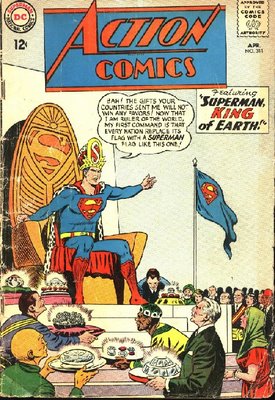
Once again, what started as a response to Matthew has grown into an entire blog post (including a little anti-Bush rhetoric and, to my surprise, praise for Infinite Crisis). In response to my last post that Superman was in fact a working class hero and his stories are anti-classist, he wrote

Everything you say about Superman is true. But you're talking about what Superman does, and what he thinks and believes and stuff. What I was talking about is who he technically is, and who he is is, basically, the Lost Prince of Krypton. He's like Carrot in the Discworld books.

This way, the Superman writers get to have it both ways. They can draw from the alien-aristocrat superhero archetype, but they don't have to make him act like it. (Contrast: Superman, and Dr. Tachyon from the
Wild Cards novels.) This may actually be one reason (out of all the many reasons) why Superman is such a great character.
I meant to respond right away, but I couldn't tell whether our disagreement over the class of Superman was a minor semantic disagreement over the definition of the word "is" (which would be too minor to even argue) or a major philosophical one over the meaning of social class and the nature of hereditary predestination. I'm going to assume it's the second, even though there is no way to do that justice in one post of my comics blog.

Matthew says that Superman, in the tradition of Oedipus, King Arthur, and Aquaman, may act as a peasant hero but he is in fact a king-in-disguise, that it is his Kryptonian genetic destiny shining through that makes him Superman. That he's a hero because of his elite genetics, no matter how much he pretends he is a commoner.
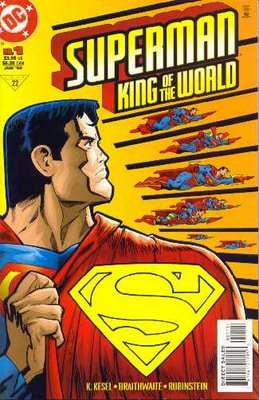
My problem with basing Superman's class on his genetics over his actions is that class is a social construct. It is only through what he and others consider him to be that we know what class he belongs to. And Superman chooses NOT to be a king (stories where Superman chooses to become a king will be ignored because they are terrible) The myth of aristocracy is that class is genetic, that some people are just born good enough to rule, and that this inherent goodness can be passed down from generation to generation (like the X-Gene!)

And Superman's own story proves the myth false. Yes, Clark's blood obviously gives him "powers and abilities far beyond those of mortal men." However, what makes him a good guy can't be his blood, because Kryptonians are the assholes of SPAAAACE (below the comic).

Zod, Preus, the Eradicator, the new Kara Zor-El (possibly)... Those that come to Earth preaching the superiority of Krypton are by and large really, really bad guys. And even under the best of circumstances, Kryptonian society was ruled by arrogant morons who couldn't see their planet was falling apart despite the evidence of the best scientists of the time (cue Global Warming joke). So clearly, just being vulnerable to kryptonite isn't enough to make you better than the masses.

No, what makes Superman a hero is the choices he makes. And whenever Superman is forced to choose between the Kryptonian way and the Earth way, he chooses Earth, every time, and embraces his life as Clark Kent (the end of Kingdom Come, for example). And as long as Superman chooses to live as a middle-class employee, THAT is who he is. Jor-El and Lara may have given him powers, but it's Jonathan and Martha, his "humble" lower class parents, who made him a hero.
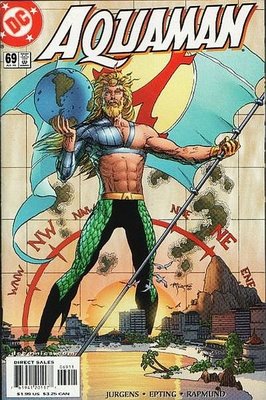
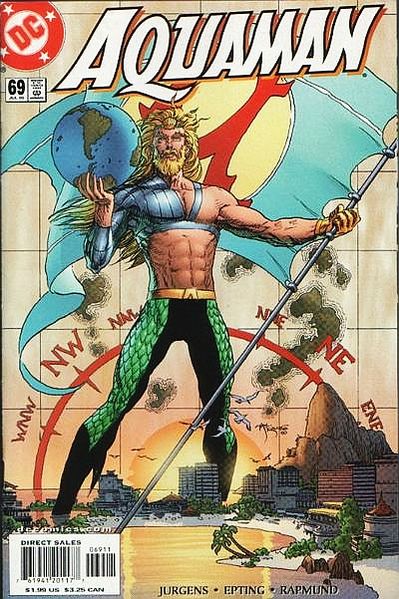
This is unlike almost every other superhero, by the way. Contrast Superman with Aquaman, for example. Like Superman, he was orphaned as a baby, raised in an alien world, and grew up as a human for at least part of his life (where he learned English and was christened Arthur Curry). But when Aquaman learned where he was really from, he rejected the surface world and threw in his loyalties to Atlantis whole-heartedly, in the more traditional Arthurian arch-type. (Ironically, to become King Arthur, he had to reject the name "Arthur.") Even given the chance, Superman would NEVER give up Earth to return to Krypton.

Matthew brings up Carrot Ironfoundersson of the Discworld novels, another heroic king-in-disguise who refuses to take the throne. But that, I think, argues for MY point. Discworld, after all, is a satire of the myth of aristocracy (among many other things). Most of the other characters think Carrot should rule because of his unacknowledged heritage, but those that think that way are idiots and bad guys.

The smarter characters, including Carrot himself, know he's not smart enough to run the city, nor ruthless enough to do half the horrible things he'd need to as King (or Patrician, as the position is called). That having the right name and the right daddy isn't enough, that "the right blood" is in fact close to meaningless (I'd make another joke here...). Carrot may be related to a king, but day to day it's much more important that he learned how to be good man (or dwarf, it's complicated) and can throw a strong right hook.

Carrot, of course, is a deliberate satire, and I doubt Siegel and Shuster were thinking too deeply about Jungian arch-types and Marxist rhetoric when they created their science fiction strong man, but I think Superman is a stronger character because of it. Carrot can really only be that satire: "King Arthur, but not," stuck in an old debate over the divine right of kings and dictators. Superman can be that satire and more, moving beyond that class discussion to a classless society where a man is judged only by his actions.

Which leads me to my defense of Infinite Crisis. I dropped Civil War when I realized it wasn't about anything. And while Infinite Crisis was flawed, I can tell you what it was about: the myth of heroic destiny. Superboy-Prime (and to some extent Alexander Luthor) believed he had the right, the duty, to destroy the universe and remake it in his image because of who his Kryptonian parents were, and that he would ALWAYS be in the right, always be the hero because his name was Kal-El, he was from Krypton, and he had great power. He was wrong. In the end it came down to Superman, our Superman, laying it out for him:
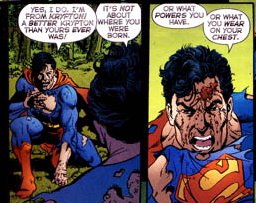

And, after laying Prime out, Clark lets him know what it's all about:
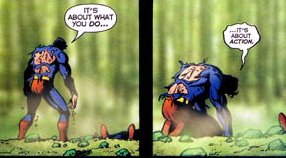

It's about action.


What makes Clark Kent "Superman," and not just another asshole Kryptonian, is his actions. So when judging what class Superman belongs to, whether he's an elite looking down on the masses or one of us, we can only judge him based on "what Superman does, and what he thinks and believes and stuff." Because what else is Superman, in the end, other than those things?

Wednesday, August 16, 2006

It Had to Be Said #4

The goal of a comic book company is to sell comic books.

The goal isn't to make art, or even tell a good story. It certainly isn't to keep your imaginary friends alive.

A comic book publisher wants to, nay, needs to, sell books.

If that means putting subjectively bad but objectively popular artists on covers because more people will buy it, fine.

If that means occasionally pandering to immature fanboy sensibilities, fine.

If that means cosmetically changing a character to better match their more popular movie or TV incarnation, fine.

Even if that means canceling a much loved, well reviewed book because it isn't selling and is therefore losing money, fine.

Does that mean they shouldn't even try to put out a good comic? Of course not, because the long term goals of selling books and making money depend on making art, telling a good story, and, yes, keeping your imaginary friends alive. But in the short term, compromises sometimes have to be made.

If only there was a good example, some bit of news that hit today that could best illustrate my point...

Ah yes, Civil War is going to ship one month and two months late, and take four or five popular titles with it, so as not to spoil events in the main book.

Compare that to Infinite Crisis, which went to multiple artists and, by issue 7, un-inked art, in order to have the books ship on time. (Or close to on-time, I'm not sure. I think it slipped but I'm not sure by how much). What was important was that, like Civil War, Infinite Crisis tied into a lot of books, and if it had missed its ship dates, it would have thrown off the One Year Later launch and 52, which were both successes.

The publishers at Marvel chose quality art over business concerns. Those at DC chose to place the sales of the rest of their line over the quality of their flagship book. Which was the right choice?

As a fan, of course, I hope for nothing but the finest quality in the comics I buy. And as any fan of Astonishing X-Men knows, sometimes you just gotta wait. I'm pretty sure I'll be waiting for Seven Soldiers #1 for the next five years. And it will be worth it. And though I enjoyed the series overall, I was honestly disappointed with Infinite Crisis #7.

However, Brian Hibbs and every retailer who is pissed off right now are absolutely right! Some books you wait for. Your MASSIVE company-wide crossover is not one of them. It must ship, rain or shine, because too many other books depend on it. Even if you're sure you'll get the sales later, comic book stores operating on thin profit margins may not be able to wait for later. Deny them sales too often, and they go out of business, then you don't have a place to sell your late-ass but perfect books, and then you go out of business. And then all my imaginary friends die with you.

Business HAS TO come first. HAS TO. Nobody likes to put out a bad book but it's sometimes put out a bad book now or lose your opportunity to put out a good book later. That means hitting your deadlines, even if you think the book isn't perfect. That means selling to the audience that already exists. That means putting out stories like everybody else is doing because that's what sells. BECAUSE THAT'S WHAT SELLS and in the short term that's how you stay alive.

BUT... that only keeps you alive for today. If you still want to be around tomorrow, you ALSO have to try new and different stories, experimenting with genre, structure, style, tone. You also have to try to expand or create new audiences. You also have to give some artists a little more creative freedom because they just aren't going to make deadline. You have to try to create good art.

Because that's how you make the real money!

[Edit: Declarative Rabbit says in one sentence what I tried to get across in the whole long post.]

Saturday, July 29, 2006

Ahead of Its Time

"What is this Hypertime that you speak of?"– Mark Waid at San Diego Comic-Con


Well, Mark, I'm glad you asked.

Hypertime was Mark Waid's [edit: Fine, FINE! and GOD OF ALL COMICS Grant Morrison's] attempt at replacing the parallel universe concept in the DC Comics universe.

Before 1986, most DC Comics were considered to take place in the same, "mainstream" universe and comics published by other comic book companies and even National comics published before the Silver Age were considered to take place in alternate dimensions, crossing over only through extraordinary measures. After 1986, that was changed so that ALL characters created for or acquired by DC Comics existed on the same Earth, which eased character interaction. (This, I consider, was a good thing, because crossovers are fun, create a richer history for the characters, and boost sales of the smaller titles through easier use of "guest stars.")

However, editorial mandate or not, DC Comics continued to publish books that did not take place officially in the DC Universe. Originally called "imaginary stories" and later branded as "Elseworlds," these stories took the familiar characters and either placed them in radically different settings or simply had events that would make an ongoing series difficult (such as, say, death). The most famous Elseworlds is Kingdom Come, by Mark Waid and Alex Ross, though The Dark Knight Returns and Watchmen could be considered Elseworlds as well.

On top of that, there were film, television, print and radio versions of all these superheroes out there, with varying degrees of fidelity to the source material.

The "problem" was that these stories, despite being unofficial, had a habit tying into the main universe. Following the The Dark Knight Returns, the "main universe" Batman began acting more and more like the dystopian, aging, paranoid, sadistic version. Following Kingdom Come, Alex Ross's character re-designs started to appear in the main books, as well as hints that, in fact, Kingdom Come was the future of the DCU. And the Batman Animated Series introduced two important new characters to the Batman mythos (Renee Montoya and Harley Quinn), as well as changing (and improving) the design and origins for most of the characters (notably Mr. Freeze).

Hypertime was an attempt to address this reality. Mark Waid's [edit: and Bald and Beautiful Grant Morrison's] concept had two major differences from the previous theory of the Multiverse.

The first is that it included EVERYTHING. Every imaginary story, every Elseworlds, every movie, musical, every possible appearance by anyone anywhere. Presumably, this also included works that DIDN'T involve DC characters directly, like comics published by Marvel and Dark Horse. It certainly included comics published by Wildstorm, which DC Comics purchased the same year Hypertime was introduced. DC Editor Mike McAvennie once described it to me as "All stories are equally imaginary."

The second difference was that, rather than parallel Earths, the different worlds crisscrossed all the time, feeding into each other. So if, say, Smallville introduced a Lex Luthor who grew up in Smallville, yes, suddenly the DC Universe Lex Luthor had a childhood in Smallville as well. Under the old version, the Smallville Lex would have had to literally tear open a hole in the fabric of time and space and take the non-Smallville Luthor's place in order for that to occur. Under Hypertime, that changed history just sort of happens.

On the macroscale, it meant that any story, anywhere, COULD be an in continuity story for any one particular issue of, say, Impulse. Even if it's a fifty year old comic, or published by the Marvelous competition, or if it's a 19th century proto-horror novel. On the microscale, it means that every individual issue is a current within the main stream, which may or may not affect the other currents. After all, as Kurt Busiek once said, "they're all fairy tales we pretend take place in the same world because it's more fun that way."

BUT... as the quote above suggests, in the wake of Infinite Crisis, Hypertime is concepta-non-grata at DC Comics now. In fact, writer and editor alike act as if Hypertime has been, ha ha ha, erased from time. And the reason is... Hypertime never really worked. No one [edit: Not even 12th level intellects Mark Waid and Grant Morrison] ever did anything particularly interesting with Hypertime. Mostly, writers just treated it as another word for Multiverse, with the added bit that it might include some of our favorite Elseworlds characters (such as one AWESOME (and criminally uncollected) Superboy story).

Why was that? My theory is that Hypertime was too metaphysical a concept. Quite frankly, it was just a description of the way the creative process actually works. If he or she sees a good idea, consciously or unconsciously a writer will incorporate that idea into their work. Acknowledging, in story, that that happens may reduce fanboy whining about what is or is not in continuity (Yes, it's all in continuity), it doesn't actually help tell a better story. (At least not one that I can think of.) And so it's become passe.

Or has it? DC has, for now, stopped their Elseworlds line, though if New Frontier, JLA Classified, Bizarro Comics, Solo and the ALL-STAR line are any indication, they haven't stopped producing comics that are outside established DC continuity. They also still publish the Vertigo books, some of which still have an ill defined connection to the Justice League world, as well as Wildstorm's superhero and non-superhero books.

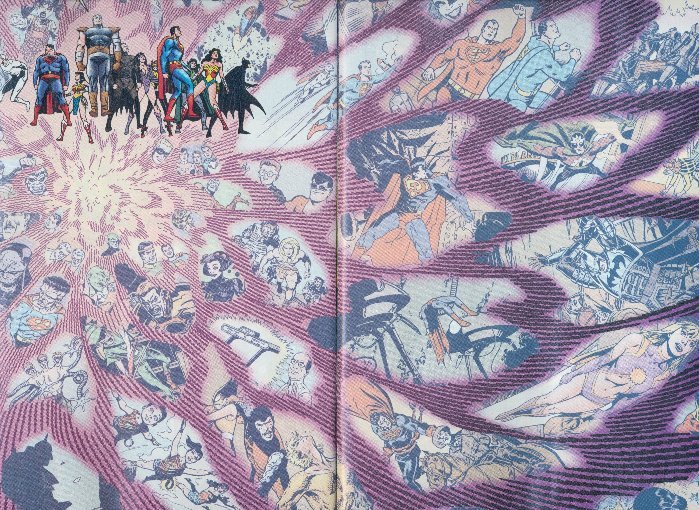
And despite the fact that Infinite Crisis ended three months ago, and DC has been publishing "New Earth" books for two months before that, we still don't know what the structure of the new DC universe is. We know that multiple Earths DID exist, it's been hinted that they still do, but it's also clear that Barry Allen, Jay Garrick, Billy Batson, Eel O'Brien, and Ted Kord were all born on the same earth, or at least everyone in the DCU remembers it that way. Similarly, the two page spread in Infinite Crisis #6 implied that EVERY comic DC ever produced, including the Zero Hour Legion and, ha ha ha, the Tangent Universe ARE also part of the New Earth, in some way. (My personal favorite part of Infinite Crisis #7 was the kids finding the Tangent Green Lantern on a beach).

So, was Hypertime really erased? Could it even be erased, considering it was just a description of the way comics were written anyway, an acknowledgment of the imaginary quality of the stories and the complexities of the world of ideas? Or have only our memories of Hypertime disappeared? For if GOOD ideas can cross from current to current, shouldn't BAD ideas be sluiced out, floating down the stream and getting lost in a sea of forgotten thoughts and half-formed dreams, never to be seen again?

Until, of course, one good writer has one good idea...

Monday, March 20, 2006

Mascot

So, it seems, I need a mascot for my blog. My hero, my sure-sell.

Dorian has Wildcat.

Scipio has Vibe.

Chris has OMAC.

I'm being a greedy bastard, and I'm taking Superman.

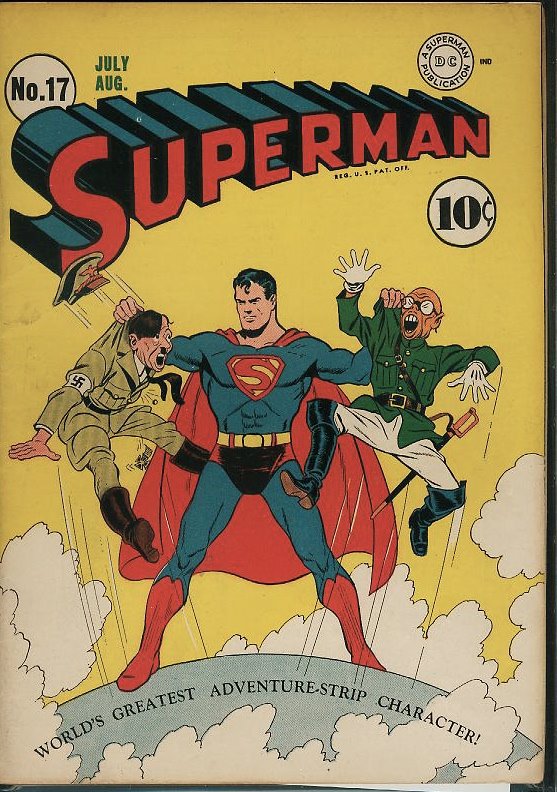
I guess I should be more specific. I'm taking this Superman. Golden Age Superman. Doesn't fly, doesn't have super vision, or super pets, or anything, Superman. This guy is all man.

And he wasn't afraid to get his hands dirty. I mean, just look at him! He sees evil and he goes right after it. He's so tough, he's scares the Iron Cross of Der Furhur!

Cause that was what this Superman did. This Superman fought for The People. He took on government corruption, unsafe mine conditions, war profiteers who reap a fortune off a senseless war. You know, things we couldn't possibly relate to in 2006.

And he did so as both Superman and Clark Kent. Because he knew that some jobs were jobs for the news media, and then his greatest power was the ability to write The Truth™.

And some jobs were jobs for Superman, and then it was time for the fists of steel!

What he didn't do, right away, was fight aliens and mad scientists, and he certainly did not come up with elaborate plots to protect his secret identity. Hell, he'd tell anyone who would listen that he was a reporter, if it would help his story. And he never, ever, ever, beat someone just because he represented goodness. It was either the typewriter or the fists. One or the other.

And I should also add that I do NOT mean this guy:

Earth-2 Superman is NOT the Golden Age Superman. He's an old version of the Silver Age Superman pretending to be from the Golden Age. And you know how I know?

For the past 20 years, E2 Superman has been watching Earth, pissed off that bad things happened to the superheroes.

GA Superman couldn't give two shits about what other superheroes were doing. Superheroes weren't The People. No, he'd be fine with that.

But if he had been Golden Age Superman, he would have broken out of there the moment the 2000 Election happened, and proceded to beat the shit out of the Supreme Court, the Bushes, the Republican Party, and the entire state of Florida.

Cause that's how he rolls.