Friday, August 18, 2006

It Had to Be Said #4b

God dammit, Dr. Obvious, stop making good points.

He said, and I quote:

if the lion's share of the revenue is going to be coming from licensing, going for fewer, high quality issues could well support that better than more, lower quality issues.
I agree with that one hundred percent.

I really think that the future of comics publishing is a move away from periodical, serialized magazines and towards more original graphic novels. Not that the floppies will ever go away entirely, but there probably will be a lot less of them, particularly from the bigger companies.

And since original graphic novels will be a lot more self contained, telling complete stories in one volume with less reference to other works, missing the on-sale date because of production delays won't matter as much. Publishers will have more incentive to try to produce the best content possible rather than hit their own artificial deadlines.

Deadlines will still matter, from a marketing point of view, just like they do in print publishing. A book that will sell a ton before Christmas can't be delayed to January 1st, for example. But unlike today, the delay of one book will only hurt the sales of that book, so a publisher could afford to let one or two books release late for the sake of quality.

Today, however, superhero comics from the Big Two don't work like that. Instead, the work a lot more like network television shows: Ongoing, episodic fiction. Like TV shows, comics are meant to be enjoyed now. Entertain you this month (or this week) and there will be a new one to take its place next week. In this analogy, the publishers are the show producers, the retailers like the networks (I'm simplifying for the sake of analogy, don't slow me down with the facts).

Now, if Lost was delayed suddenly, because J.J. Abrams got writer's block, or a hurricane hit Hawaii and destroyed the set, or Evangeline Lilly got sick, ABC would be in trouble. To be deprived of the revenue from the advertising on their BIGGEST show AND to lose the platform to promote and launch other shows would really hurt the network, and they would have every right to demand Bad Robot a) get a new writer, b)build a new set as quickly as possible and c)write around Kate for a few episodes. And that's just equivalent to Superman/Batman being late.

Civil War is much worse. Civil War is a Law and Order sweeps three-parter spanning the main show and the two spin-offs in which Jack McCoy is shot, Det. Munch moves back to Baltimore, and Det. Goran is promoted to Captain. If that three parter was delayed by two months, NBC would be in a world of shit. That's THREE major shows indefinitely postponed, at something like the last minute. So that's three hours they have to fill on three different nights. There is no way, NO WAY, NBC would allow Dick Wolf to get away with a problem like that.

Television shows are, however, already set up to hit their deadlines. They have multiple writers, huge teams of ten or sometimes twenty, who work together to pump out scripts, and multiple directors who take turns guiding episodes from script to stage to screen. There's large enough cast of characters that some weeks you can focus on B because character A (or actor A) needs to be off screen for a bit. And multiple ongoing plots and sub-plots so that you can resolve some one week and leave others open to keep viewers interested. There maybe one executive producer/head writer to keep everything together and a consistent tone, but basically they get a lot of people working together so that they can guarantee their retailer, the network, that there will be 22 products a year, rain or shine.*

And as long a comics are going to be produced and sold in episodic installments like they are, that is, as long as they are going to mimic the television plan rather than the book publishing plan, then they are going to need to be able to make a similar guarantee. Maybe in the future they can have a little more freedom, but for now, deadlines mean everything.

hmmm... team of writers, rotating directors, large cast with interweaving plotlines. Why does that sound familiar...?


*This is, by the way, how almost EVERY show on television operates from The Sopranos on down, so don't tell me this hurts the quality of a television show.

Thursday, August 17, 2006

It Had to Be Said #4a

The goal of a comic book company is still to sell comic books (even if the majority of their revenue comes from licenses and toy sales).

In response to my last post on the comic book business, Dr. Obvious makes the, um, obvious point:

Sadly though, Marvel doesn't make its money off selling books. It makes its money from license deals. See my post here to see exactly why book sales really don't matter to them. Sadly, this isn't true for retailers, like you said.

True, Marvel makes most of its money from licensing and toys, that's been true since the early '80s at least.

But publishing is still a large chunk of their revenue, so it still matters.

Just looking at the report Dr. Obvious linked to, Marvel made $25.1 million off publishing alone last quarter. Toys and licensing combined equal $65.3 million, so publishing is still over 27% of their total revenue.

That's a lot to endanger with a blown deadline like this, especially at a time when licensing revenue is down.

I am not trying to be chicken little. I really don't think anyone is going to lose their store over this, though it may be tight for some.

But if this isn't a one time thing, or if Marvel AND DC had both allowed their entire lines to slip due to one book coming out late, then a lot of stores would be in trouble, and Marvel today cannot survive without them.

The retail sales alone make Marvel a lot of money. Additionally, the single issue sales support the trades sold in (regular) book stores. No periodical sales, no trade sales. And there goes 25% of their revenue right there. That's deadly.

Even if they could somehow survive a 25% drop in revenue, they can't just fold up the publishing wing and become a storehouse for intellectual property. The comics still provide the ideas for future licensing opportunities and toy designs. No direct market, no new comics. No new comics, no new toys, no new movies, and no new TV shows.

The comics on the retailers' shelves, at least for now, are still the foundation of Marvel Comics as a business. They may not be the majority of the building, but take away those sales and the whole business falls.

Everything You Need to Know About Lois Lane

Clark Kent is the second best reporter at the Daily Planet.


Just to be clear, Clark Kent

--whose superpowers include the ability to see through walls and listen to world leaders make battle plans in their secret rooms, who is the biggest news maker on Earth and regularly hangs out in a clubhouse with all of the others--

is the second best reporter at the Planet.

In fact, the only way Clark ever beats Lois to a story is if he cheats like crazy and Lois manages to break both her arms.


(Thanks, Bully, for alerting me to Vintage ToonCast. You truly are a little stuffed bull amongst leggy supermodels.)

Wednesday, August 16, 2006

ATTENTION BLOGOSPHERE


I AM NOW FREAKING OUT!

It Had to Be Said #4

The goal of a comic book company is to sell comic books.

The goal isn't to make art, or even tell a good story. It certainly isn't to keep your imaginary friends alive.

A comic book publisher wants to, nay, needs to, sell books.

If that means putting subjectively bad but objectively popular artists on covers because more people will buy it, fine.

If that means occasionally pandering to immature fanboy sensibilities, fine.

If that means cosmetically changing a character to better match their more popular movie or TV incarnation, fine.

Even if that means canceling a much loved, well reviewed book because it isn't selling and is therefore losing money, fine.

Does that mean they shouldn't even try to put out a good comic? Of course not, because the long term goals of selling books and making money depend on making art, telling a good story, and, yes, keeping your imaginary friends alive. But in the short term, compromises sometimes have to be made.

If only there was a good example, some bit of news that hit today that could best illustrate my point...

Ah yes, Civil War is going to ship one month and two months late, and take four or five popular titles with it, so as not to spoil events in the main book.

Compare that to Infinite Crisis, which went to multiple artists and, by issue 7, un-inked art, in order to have the books ship on time. (Or close to on-time, I'm not sure. I think it slipped but I'm not sure by how much). What was important was that, like Civil War, Infinite Crisis tied into a lot of books, and if it had missed its ship dates, it would have thrown off the One Year Later launch and 52, which were both successes.

The publishers at Marvel chose quality art over business concerns. Those at DC chose to place the sales of the rest of their line over the quality of their flagship book. Which was the right choice?

As a fan, of course, I hope for nothing but the finest quality in the comics I buy. And as any fan of Astonishing X-Men knows, sometimes you just gotta wait. I'm pretty sure I'll be waiting for Seven Soldiers #1 for the next five years. And it will be worth it. And though I enjoyed the series overall, I was honestly disappointed with Infinite Crisis #7.

However, Brian Hibbs and every retailer who is pissed off right now are absolutely right! Some books you wait for. Your MASSIVE company-wide crossover is not one of them. It must ship, rain or shine, because too many other books depend on it. Even if you're sure you'll get the sales later, comic book stores operating on thin profit margins may not be able to wait for later. Deny them sales too often, and they go out of business, then you don't have a place to sell your late-ass but perfect books, and then you go out of business. And then all my imaginary friends die with you.

Business HAS TO come first. HAS TO. Nobody likes to put out a bad book but it's sometimes put out a bad book now or lose your opportunity to put out a good book later. That means hitting your deadlines, even if you think the book isn't perfect. That means selling to the audience that already exists. That means putting out stories like everybody else is doing because that's what sells. BECAUSE THAT'S WHAT SELLS and in the short term that's how you stay alive.

BUT... that only keeps you alive for today. If you still want to be around tomorrow, you ALSO have to try new and different stories, experimenting with genre, structure, style, tone. You also have to try to expand or create new audiences. You also have to give some artists a little more creative freedom because they just aren't going to make deadline. You have to try to create good art.

Because that's how you make the real money!

[Edit: Declarative Rabbit says in one sentence what I tried to get across in the whole long post.]

Tuesday, August 15, 2006

Tuesday Night Recommendation #7

Wow, double plugged by Ragnell and Kalinara (by way of Blog at Newsarama). My hit count went high tonight.

So I thought I'd try to restart a feature: THE TUESDAY NIGHT RECOMMENDATION. This is where I suggest to you, my (faithful? new?) readers a title you can pick up tomorrow that may take you a bit off the beaten path and save comics that need to be talked up.

Previous recommendations include:

FELL

SHE-HULK

JONAH HEX

JLA CLASSIFIED

MANHUNTER

and

NEXTWAVE

SO... looking at the Diamond Distributor list (via Kevin), I see that two of my previous recommendations are coming out tomorrow, Manhunter and NextWave, and of course you are instructed to buy both. But tomorrow's recommendation is something else, something new for me too:


CASANOVA #3


Why should you buy it?

1. It's cheap. Only 2 bucks!

2. Great reviews from reviewers you trust

3. It's DENSE! Like Essential Fantastic Four dense! And when you're getting it in 16 page chunks, instead of 500 page chunks, it's a little easier to digest.

4. It's ONLY two bucks!

5. Because I said so.

Monday, August 14, 2006

Supergirl's New Writer

Supergirl needs a new writer. One who understands how to write teenagers, particularly teenage girls. One with a proven track record of characters who were young and eager to help, maybe confused and over-come with hormones and distrust of adults. One who gets crushes and is more powerful than they realize.

I nominate Chuck Dixon.

In the pro-column:

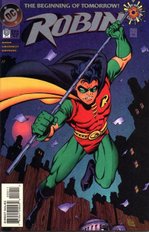
He launched Robin and wrote it for 100 issues.



He launched Nightwing and made him cool.
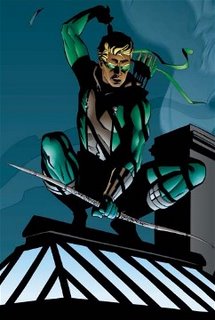


He created Connor Hawke and wrote Ollie's best moment of the '90s, blowing up over Metropolis.


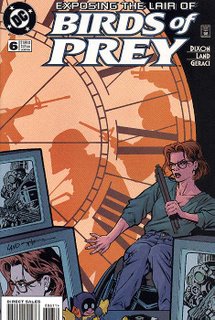
He created the comic and team Birds of Prey.


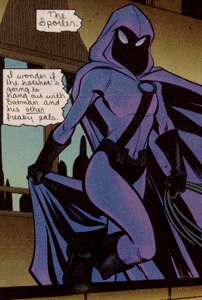
He created Stephanie Brown, a.k.a. The Spoiler.


In the negative column:

Um, Dorian? Do you want to take this one?

He's made some offensive statements about homosexuality not belonging in comics. (Though, I will say that his particular objection was in reaction to a miniseries that was going to reveal the Rawhide Kid was gay. A miniseries that, in retrospect, turned out to be a horrible immature run of wink wink sex jokes that NO ONE liked, so, just maybe, he might have had a point.)

He also has some pretty conservative politics, it seems. So I'm not sure I'd like to have dinner with him.

I don't care. I like the books he writes. He writes fantastic action scenes, and more bad-ass panels per page than should be allowable by law.

More importantly, I like the characters he writes. To take an example chosen completely at random, let's look at, I don't know, Stephanie Brown?

Stephanie could have been a girl completely defined the men in her life. Daughter of supervillain, girlfriend of superhero. Completely reactive to the world around her.

But she wasn't. She had a life of her own. A relationship with her mother that was probably the most important in her life. A desire to be a superhero, that may have started as rebellion against her father and infatuation with Robin, but it grew into an honest need to save people and be a better person. She trained, with Batman and with the Birds. She was smart and funny, but she was also flawed, impulsive and emotional. In short, she was a teenager.

And she was also a mother. Stephanie found out she was pregnant from an ex-boyfriend, refused to have an abortion, and then gave up the baby for adoption. And everyone of those choices were made by HER.

A lot of writers would give a girl an unexpected pregnancy. It's easy drama. And it would take a very brave writer indeed who would have a character have an abortion (name one!). But other writers would have employed the miraculous miscarriage or just saddled her with a baby, where she would suddenly learn to love and cherish it. Dixon went further, and wrote the scene where she gives up her child with enough emotion that the reader understood there was no good option, that any choice she made was painful, deeply painful. (Then, in true superhero fashion, she solves her problems with violence, by beating the ever-loving crap out of her no good dead-beat ex!)

And Dixon wrote all that. Stephanie's greatest moments, her most private pain, her obvious crushes and awkward attempts to become a trusted member of the Bat-team, basically every reason women were PISSED OFF that Stephanie was killed was because Dixon knew how to write her.

And that's what Supergirl needs now. RIGHT NOW. Less "more powerful than Superman," and more trying to be human and fit in and stand out at the same time. Less "where do I come from and am I evil," and more dumb crushes and bone-head plays for attention. Oh, and more butt-kicking, and less butt-grabbing.

In other words, more teenage girl, and more Chuck Dixon.

At least that's my opinion.

Sunday, August 13, 2006

Meanwhile...

In the DCU Green Room...

I don't know about everyone else, but I'm still checking out Keith Giffen's sketch's every week. Not only do I get further insights into the story of 52, (for example, in the sketch it's clearer that Devem intentionally started the fire), but it's also fun to see how a book is put together, and how artistic choices down to rendering and inking stage effect the story telling.

And as for the comic itself, I'm going to go on record as saying what I'm enjoying most is what most reviewers seem to hate (no, not the History of the DC Universe, starring Donna Troy. THAT was awful).

I'm enjoying the inconsistency. The fact that one week you'll get the Question, but then you might not see him again for a month while we focus on people entirely unlike him. Reviewers who like street level crime fiction are disappointed when an issue focuses on Isis, reviewers who like heroes LOST IN OUTER SPAAAAACE are disappointed when an issue focuses on a more traditional story of superhero secret identities and foolishly brave reporters.

But I'm really digging the cross-genre action. The idea that the DC Universe is a heterogeneous place; where a tragically doomed romance of the gods might be interrupted by a sci-fi gang armed with Kirby-tech weapons crashing the joint; a celebrity fall from grace and a timeline gone haywire are in fact the SAME story; and that the only person who can solve the disappearance of mad scientists from around the world is a mourning detective who may or may not have discovered the secret to bringing back the dead; gets me pretty danged excited.

Certainly I'm not saying the book is without its flaws. Inconsistent art styles I don't mind. Inconsistencies within a book are more annoying. I KNOW deadlines can be tough and for a book like this I'd rather have it on-time than highly detailed, but for the next nine months or so 52 is going to be DC's big book so you'd kind of hope they'd put just a little more effort into it. Some of the dialogue has been superb, but some has been kind of clanky and the last issue has some foreshadowing so heavy-handed I'm kind of hoping it's actually a red herring. And the less said about a certain terrible (and disappointing) back up feature, the better.

On the whole, however, I so enjoy the concept of 52 that I'd pick it up with even a half-way decent execution, and for all the complaints, the execution has been good, sometimes great! So unless it goes completely off the rails soon (and dear God don't let that happen), I'm in for the long haul.

Question Time

To me, one of the greatest beneficiaries of Hypertime has got to be be The Question.

While everybody has a different favorite part of 52, everybody seems to agree that The Question is awesome. Whether he's mentoring Montoya with koans, rifling through barely organized files in his rusted out old van, cracking a Gauntlet joke, or casually breaking the fourth wall, everything he's done so far has been HIGHLY amusing. And that's not even getting into the kung fu.

But who IS The Question? Or rather, which Question is that? Is he Steve Ditko's Objectivist crusader? Denny O'Neil's "Zen Master of Crime Fighting"? Bruce Timm's paranoid conspiracy theorist? Even Rick Veitch's urban shaman?

And thanks to the wonders of Hypertime, the answer is "All of them." The Question is "comics' only Zen Objectivist conspiracy theorist." From wildly different authors' visions of who The Question is, we get some basic truths about him from where his different philosophies overlap. There's a fundamental belief that perceived reality and objective reality are very different, that our flawed faculties cannot passively understand the world and that truth must be actively sought by asking the right questions.

In short, "Things are never as they seem."*

So basically, any writer going forward, as long as he keeps that core, can go forth and write a great Question story, picking and choosing from all the earlier versions across time and media the parts he likes, jettisoning that which doesn't, and adding something of his own. Add in a bit of Mr. A. and Rorschach, The Question's creative doppelgängers, and one of the greatest character designs in comics, mix well, and you've got the character of the year.


*Of course, the philosophies diverge as to why reality can't be seen, whether it's because humans aren't rational enough, or whether they are too caught up in themselves, or whether They are hiding the truth from the world.

Saturday, August 12, 2006

The McGraw Hill of Metropolis

Right, so Text Books in the DCU are named after crossovers and major storylines. Makes sense:

Bloodlines: A genetics book focusing on meta-gene detection and activation.

Our Worlds at War: A military history of intergalactic and pan-dimensional conflicts.

Genesis: Comparative theology (important in a world with old and new gods and angels who occasionally join the Justice League).

Any others?