Showing posts with label Jack Kirby. Show all posts

Tuesday, November 28, 2006

Nature, Nurture, Darkseid

On the surface, Jack Kirby's Fourth World saga is a simple adaptation of Manichean philosophy: there's a world of Good, New Genesis, and a world of Evil, Apokolips, and all of human existence is in the narrow strip where they overlap and conflict.

But the crucial story of the New Gods, what, if this were a "real" mythology, would be the central myth, (and incidentally, one of Jack Kirby's favorite stories of his own,) is "The Pact." The Pact is a very un-Manichean story in which Highfather (Good) makes a deal with Darkseid (Evil) in the name of peace, and seals this deal with the extreme measure of trading sons (which is a step up from just spitting in your palm, I guess).

In any morality as black and white as Manicheanism, such a pact would be doomed to failure (Mr. A would not approve!) because Evil would not honor any such contract, placing Good in the weaker position that they could only get out of by breaking the contract themselves, erasing the difference between Good and Evil. And, indeed, Darkseid intends to subvert the pact from the beginning.

But instead of leading to the downfall of New Genesis, The Pact works out in Highfather's favor! Because, despite Darkseid's plotting, the actual result of the Pact is that the traded sons--Orion, who has the nature of Apokolips and the nurturing of New Genesis, and Scott Free, who has the nature of New Genesis and the... ah, "nurturing" of Apokolips--BOTH end up fighting for the side of Good!

There are a few lessons to be drawn from that. First is that Good is not something that resides solely in one's blood or one's environment, but in both. Secondly, Good is inherently more compelling than Evil. Evil is NOT a force equal and opposite to Good. Evil may, in fact, be the mere absence of Good, a void that can be filled through whichever medium, genes or education, that is available to Good. Third, there are therefore no truly evil people, even beings that supposedly embody Evil. Any being capable of choosing, any being capable of change, has the potential to be Good!

Consider Big Barda. Unlike Scott and Orion, she is Apokolips born and bred. It is therefore neither in her nature nor her nurture to be Good. As a pure creature of Apokolips, there should be no Good in her. And yet...

And yet, by meeting and getting to know Mr. Miracle, the character who perhaps best embodies Kirby's ideas about what Good is, she falls in love with him and the idea of freedom he represents. He inspires her to be better, to treat others with respect, to demand the freedom that he himself refused to ever relinquish, and fight for the freedom of others. (Also take note that their ideal of freedom, their escape from the high fantasy drama of the Fourth World saga, is a mundane suburban existence as husband and wife. Which just goes to show you don't need to be a punk to be a rebel.)

This is a much more nuanced, much more hopeful, meditation on the struggle between Good and Evil than most superhero stories; heck, there's more depth in this story than in a lot of mythology. The idea that even demons can be redeemed, that all that separates a Fury from a Goddess is a light to show the way, shows a more sophisticated system of thought than naming the villain "Dark Side" would imply.

And, perhaps, that is Darkseid's true villainy: that he disguises the world as one of sharp divides, Us and Them, black and white, Good and Evil, in eternal conflict, never-ending battle, where causes are defended not by their inherent value but by the force of arms. It takes a (Mr.) Miracle to show the folly in this ideology, that the New Gods of both sides have more in common with each other than differences, and that the Good can trust the rightness of their cause to appeal through dialogue and contracts.

It suggests that the best way to combat true evil in the world is negotiation, compromise, listening. Because compromising your goals does not compromise the good of your cause, and somehow, in some way, Good will out!

Thursday, September 28, 2006

Startling Discovery!


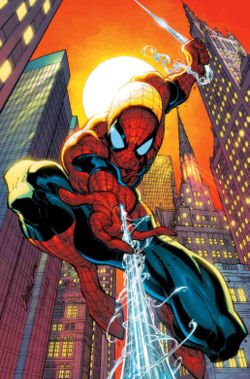
Spider-Man

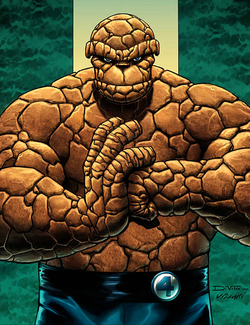
The Thing

Actually the same character!


Hard luck hero whose sense of responsibility is far greater than even the great power he received in a radiation accident: an accident that on the one hand gave him the power to challenge gods and on the other turned him into a freak feared and shunned by the rest of society.

Orphaned as a child and raised in the outer boroughs of New York by his kind but poor Aunt and Uncle, he grew up to with surprisingly low self-esteem, given to DEEP self-pitying at the smallest set back, but hides his morose-ness behind a cavalier attitude towards the cosmic weirdness that surrounds him and witty banter with even his most deadly foes.

That pretty much sums up both characters there, doesn't it?

But they look different, you might say! Spider-Man is... and while the Thing is made of.... True! But the way they vary in design are precisely the ways they mirror the artists who designed them!

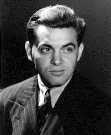
The Thing is stocky, strong, pugnacious and (originally) short... like Jack Kirby!


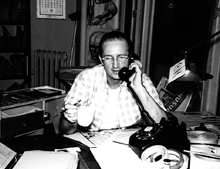
Spider-Man is lean, intellectual, and (originally) be-speckled... like Steve Ditko!


Which I guess just goes to show: writing yourself as the super-hero of your own story?

Not a new thing.

Monday, September 18, 2006

Is Twelve Issues a Year Too Much to Ask?

That probably reads more sarcastic than I intend. It should be read "Is twelve issues a year too much to ask?"

Should we expect the average professional penciler to be able to produce (12 x 22) 264 finished pages every year? Which is roughly a page every work day, with weekends and holidays factored in.

I know some guys can do it, like Scott McDaniel, Phil Hester, and Jim "The Talent" Balent, who, say what you will about what he chose to draw, managed to draw 79 straight issues of Catwoman without a fill in artist, and that's a pretty impressive run. (why yes, I do own all 79 issues. Why do you ask?)

And I know you're going to say Jack Kirby did that on 5 titles on a time, but c'mon, he's Jack Fucking Kirby. Larry Bird could sink a three-pointer from half court, but that doesn't mean the Celtics expect any of their current players to be able to do that.

Most artists today, I think, just cannot do that. And frankly, I don't think we should even expect it.

I mean, it's easy for us on the clattering keyboard side to say, "yes, that's what they're paid for," but I know from (vicarious) experience that pencilling is hard-ass work. On top of the creative time spent with the blank page, figuring out panel lay-out and blocking each scene, making sure the flow is right and the narrative clear, there's the actual craft of drawing, filling in each line and curve, rendering each face to be distinct, making the background feel both real and at the same time out of focus. And the more detailed, the harder it is to make and the longer it takes to produce.

And while a mini-series can be given the lead time needed to account for an artist's speed, ANY head start will eventually catch up to a penciller on an open ended book. So we have three options for an on-going book (if you can think of any others options, please let me know). You can stick to the 12 months, rain or shine, schedule, and just be prepared to drop a fill-in issue or two in, either stand alone or not, or you can work the schedule around the artist, or you only hire artists who value the deadline over the art.

And I don't know what's the right thing to do. Do you?

Tuesday, August 08, 2006

And somedays, you CAN get rid of a bomb!

(If I had a scanner, I'd scanner in the evening...)

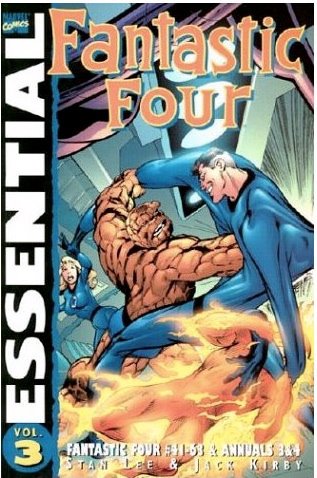
Thanks to the suggestion of Philip Looney, I picked up the Essential Fantastic Four, v. 3 last Thursday at my regular stop to Midtown Comics.

I'm having a blast, but it's slow going. They wrote 'em dense in the old days. Not a lot actually happens (the Inhumans plot, which I'm still in the middle of, moves at an Ellis-ian pace,) but it's still a slog to get through all that verbiage. Everybody talks. And talks. And talks.

But when the action kicks in, hoo boy! It's not like I'm the first person to say this, but wow, Kirby is just awesome. The wedding issue (which I now see as the proto-type for EVERY superhero slugfest) is just a bacchanalia of absurdity, villain beaten by hero beaten by new villain beaten by new hero beaten by new new villain.

The best moment, BY FAR, is the rise of Attuma from the depths, complete with an entire Atlantean fleet. Kirby takes an entire page to ratchet up the dread, making sure you, the reader, know that these guys mean business, and Stan, the Man, Lee's over-over the top narration tells you that it... IS... ON!

Turn the page.

The entire fleet is wiped out in three panels when Daredevil drives an armed ATOMIC BOMB into the ocean. The best part about it is that it's a COMPLETE ACCIDENT. He didn't even SEE the fleet (of course), he was just trying to get rid of the bomb!.

I couldn't go on. I was laughing too hard. I literally dropped the book (on to my foot, which hurt cause it's a thick tome, but I didn't stop laughing.)

When was the last time you saw an entire invading army wiped out because a blind man carelessly threw an atomic bomb into the ocean?

I tell you, it's GLORIOUS.